
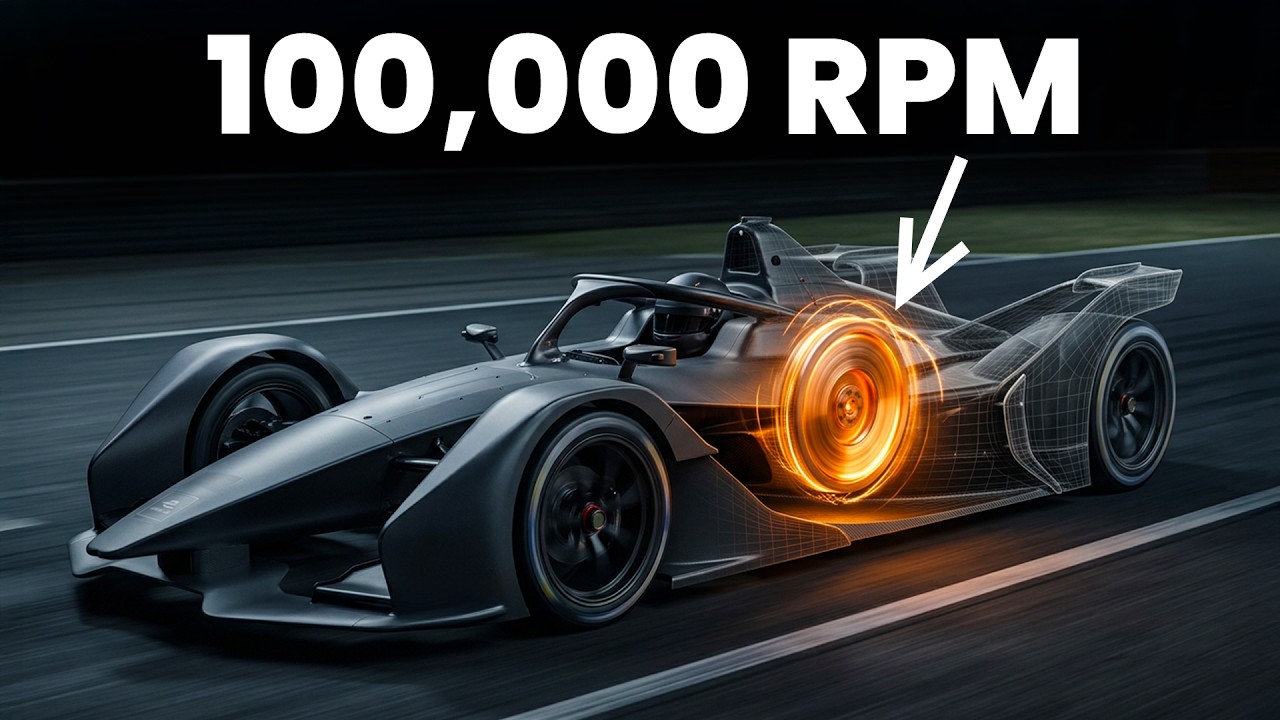
When commentators began noticing that the Nissan Formula E car was finding inexplicable speed down the straights, the explanation was not an aero upgrade or a software patch. It was, according to Dr Chris Vag, a deliberate year-long effort to find energy storage outside the boundaries of a conventional battery — and a single-minded refusal to accept that every route had already been explored.
Speaking on Scott Mansell's Driver61 YouTube channel in a long-form feature released ahead of the 2026 F1 season, Vag described an engineering philosophy that will sound familiar to anyone who has watched Formula 1 chase its own regulatory grey areas this year.
"To find that special idea that you think nobody else has seen — that reads between the lines, that sits slightly in that area where it's legal but it's not obvious, and you think that nobody else is going to have seen this — actually, you freeze time," Vag said of the approach.
The target was ambitious to the point of absurdity.
"The starting point was what would it take to get a second per lap of performance — or even better, to be able to lap every other car on the circuit and be the only people on the final lap of the race," Vag recalled.
Formula E, like F1, governs both the energy a car can deploy and the instantaneous power it can produce. That double limit is what makes the championship tractable as a spec series. Vag's insight was that the rule book did not quite define the full landscape of ways energy could be stored and released.
"One is energy and the other one's power. So both are limited by the regulations. You've got a maximum amount of energy that you can deploy in the race, and you've got a maximum amount of power that you can deploy at any point in time," he said. "To be able to exceed those — even temporarily — would provide massive advantages."

From that starting point, Vag's team systematically worked through alternative storage mechanisms.
"I explored a whole range of different options," he said. "Thinking about how else can we store energy on the car and how else could we deliver that to the wheels, and looked through all of the different types of energy storage that exist physically."
Kinetic. Potential. Chemical. He ran through the list. The solution — which Driver61's feature carefully walks viewers through without handing rivals a blueprint — exploited a specific ambiguity in how the energy regulations defined storage versus deployment.
The results showed up almost immediately on track.

"It started to become quite clear that we were going to dominate qualifying throughout," Vag said. "And it also started to become clear that the race pace was going to be a dominating factor as well."
Pit-lane commentators noticed long before the rivals could diagnose the cause.
"The Nissan on the straight is on a different planet," one observer told the Driver61 camera. "Don't know what it is, but it's really strange."
The governing body eventually stepped in and closed the loophole, rewriting the regulations to specifically prohibit the architecture Vag's team had pioneered. Driver61 frames the story as emblematic of the engineer's craft — the willingness to interrogate a rule book line by line, and to trust that the answer the sport has settled on might not be the only one possible.
The parallel with Formula 1's current yo-yo debate is hard to miss. The 2026 rules are also an attempt to balance energy and power, also locked in, and also producing unintended behaviours that engineers are being asked to solve within strict boundaries. Vag's anecdote is a reminder that the most uncomfortable answers in motorsport tend to come from the people who refuse to accept the rule book as a closed document.
Formula E banned his car. F1, whether it realises it or not, will spend the next four years living with the same kind of question.
---
*Originally published on [News Formula One](https://newsformula.one/article/driver61-banned-nissan-formula-e-chris-vag-engineering-loophole). Visit for full coverage.*