
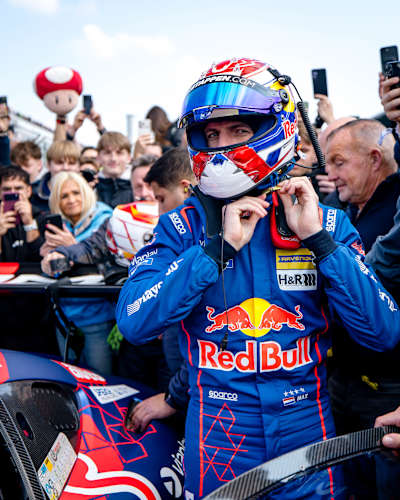
For most of Formula 1's hybrid era, brake balance has been a fine-tuning detail somewhere between the steering wheel and the engineering meeting room. Under the 2026 power unit rules, it has become a defining problem of the car. Lawrence Butcher, technical editor at RMW Magazine, spent the Bahrain test cycle watching drivers wrestle with it — and his explanation reveals why the season's qualifying sessions have been delivering moments that look, from outside, like simple driver errors.
The shift is not subtle. The 2026 MGU-K is rated at 350 kW — three times what teams had to manage last year. The mechanical brake hardware is broadly the same. The state-of-charge limits, despite the rules headline, have not really moved either. The result is a car where the engine is doing the majority of the rear-end work, and where any deviation from the optimal harvesting line punishes a driver immediately.
"It's been really interesting this week watching the drivers get a handle on these cars in Bahrain," Butcher told viewers. "Particularly through Turn 10, downhill, left-hander. So many were locking a wheel. And it's all because they're trying to do this balancing act between this really, really powerful MGU-K. I mean, 350 kW is three times what they had last year. And coming down this left-hander, it's just getting that balance, balancing the mechanical brakes against the recovery, is a really tricky problem for them."
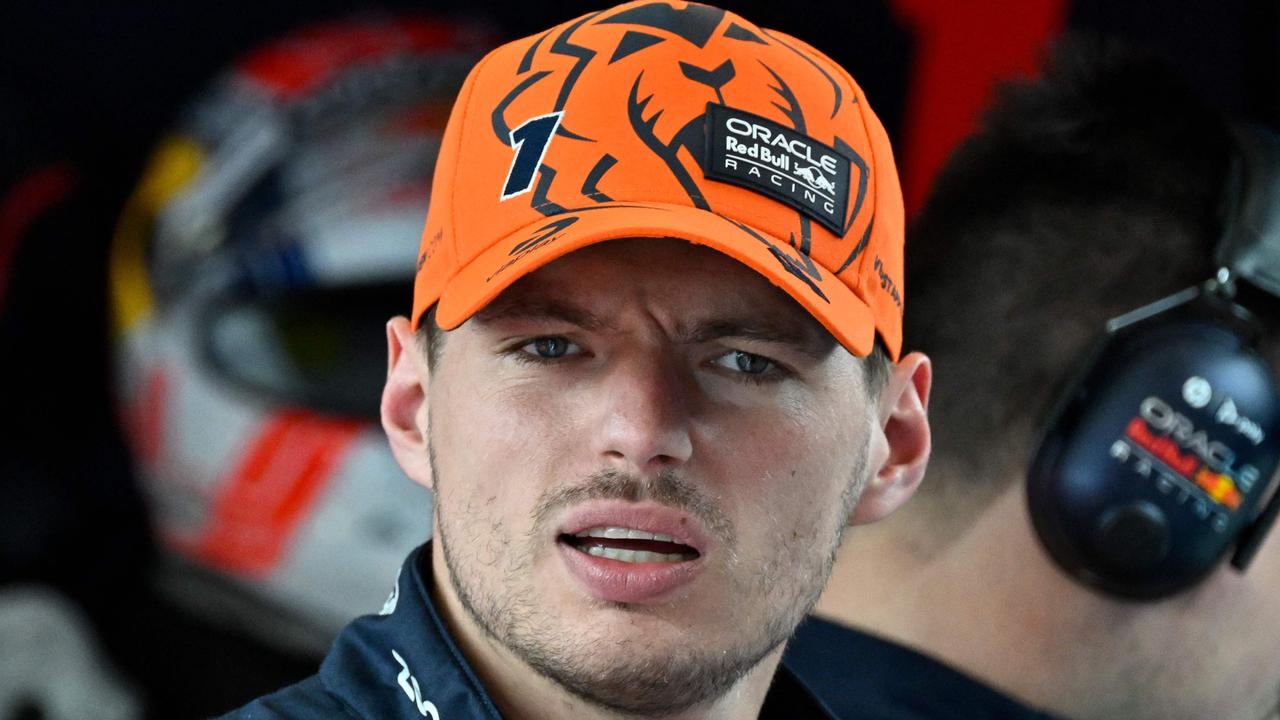
The ratio between regenerative braking and pad-and-disc braking is the new performance lever. Get it wrong by a small margin and the rear tyres lock; get it right and the car captures more energy than its rivals on the way into the corner.
Butcher walked through why the regulations leave so little headroom. "Despite the MGU-K being so much more powerful this year, the teams have actually got basically the same size battery they had to play with last year," he explained. "You've got this 4 megajoule limit and it's not actually a limit on battery size. It's a limit on state of charge difference. So you can have a state of charge variance of up to four megajoules of overlap and they're allowed to recover up to nine megajoules. But what it means is that to get the most out of this powerful, powerful motor, they have got to be cramming energy back in at every opportunity."
Cramming energy back in is what is reshaping the choreography of a Grand Prix lap. The most arresting illustration is at Bahrain's Turn 10 — a corner the entire grid spent the previous decade taking in second gear.
"We're seeing into the corners drivers dealing with the cars in a very different way to how they might have been last year," Butcher said. "For example, going back to Turn 10 again, Max Verstappen in the Red Bull, he's been knocking all the way down to first gear for that corner when normally it would be a second gear corner. And the whole reason for that is to get that MGU-K spinning in its most efficient operating range, getting as much energy back into the battery before corner exit."
The implication is that the corner that previously rewarded a smooth, momentum-preserving entry now rewards a downshift that would have been considered a mistake under the previous rules. Drivers are being asked to drive a car that wants different things from them than the one they finished 2025 in.
The simulators built for it cannot quite catch up. "All the teams have got really, really efficient, effective modelling simulation capabilities back at their factories," Butcher acknowledged. "They'll have been running these cars on four-wheel dynos as close as possible to realistic track simulation, with the driver-in-the-loop simulator, all of those bits. But really, it's when the cars hit the track that they actually find out. And talking to so many engineers this week, it's been a case that they're not in the dark, but they're very early in the learning curve with these cars."
For F1's competitive picture, that learning curve is where the championship is going to be decided. "Energy recovery, deployment, braking — all of that is going to be such an area of not just getting the cars right for the drivers, but it's where so much of the performance is going to come this year," Butcher said. "It's going to be — who gets that right will have a proper competitive edge."
That conclusion explains the early-season pattern more cleanly than most of the on-track storylines. Mercedes have spent eight weeks looking like a team that has solved the integration earlier than the rest. Red Bull have been visibly aggressive on energy and visibly punished by it on tyre wear. Aston Martin have spent races simply trying to deploy their power consistently enough to finish.
The 2026 cars are not, as Verstappen has said, the easiest things to drive. They may, however, be the most engineering-rich Formula 1 cars in a long time — and the team that figures out where the brake stops and the engine begins is the team that wins the championship.
---
*Originally published on [News Formula 1](https://newsformula.one/article/f1-2026-braking-mguk-verstappen-first-gear-bahrain-turn-10-butcher-rmw). Visit for full coverage.*