
IndyCar has rewritten its push-to-pass rules in response to the Long Beach software meltdown that briefly turned the overtake button into an honour system, and the change has already drawn sharp pushback from one of the series' most experienced racers in Graham Rahal.
The trouble began at Long Beach last month when an IndyCar timing-and-scoring failure left the push-to-pass system enabled across the field's lone race restart. Of the 25 drivers on track, 12 used the boost during a window that should have been disabled. The series initially moved to expand legal push-to-pass usage, including allowing it on restarts at certain road and street circuits, before tightening up its language again ahead of the Sonsio Grand Prix at the Indianapolis Motor Speedway road course.
The new wording places responsibility squarely on the cockpit. "It is the sole responsibility of the Competitors to ensure that Push to Pass is not utilized during any period where prohibited," the rule now reads. "Any successful utilization of the Push to Pass during such periods, regardless of INDYCAR signal status, is prohibited and subject to penalty."

In other words, if the system stays enabled because of a software glitch, the driver is still responsible for not pressing the button. The change is a direct response to the post-2024 fallout that engulfed Team Penske at St. Petersburg, where IndyCar found the team's software had been manipulated to enable push-to-pass on restarts. Josef Newgarden and Scott McLaughlin were disqualified once the breach was uncovered.
Graham Rahal, who has been an outspoken voice on series governance for years, was unimpressed by the new framing. The Rahal Letterman Lanigan driver also flagged what he believed were timing inconsistencies in the system that he said only deepened the confusion.
"IndyCar also announced that I hit the button for 0.00 seconds, so explain that to me," Rahal said. "I would say that means I didn't use it. Yeah, I don't know what the hell that is."
His frustration with the rule itself was unvarnished. "Anyway, I'm not a fan. I'm not a fan. Yes, it's not available on the initial start, but it's available on the restarts. Yeah, I'm not a fan. We'll just leave it at that."
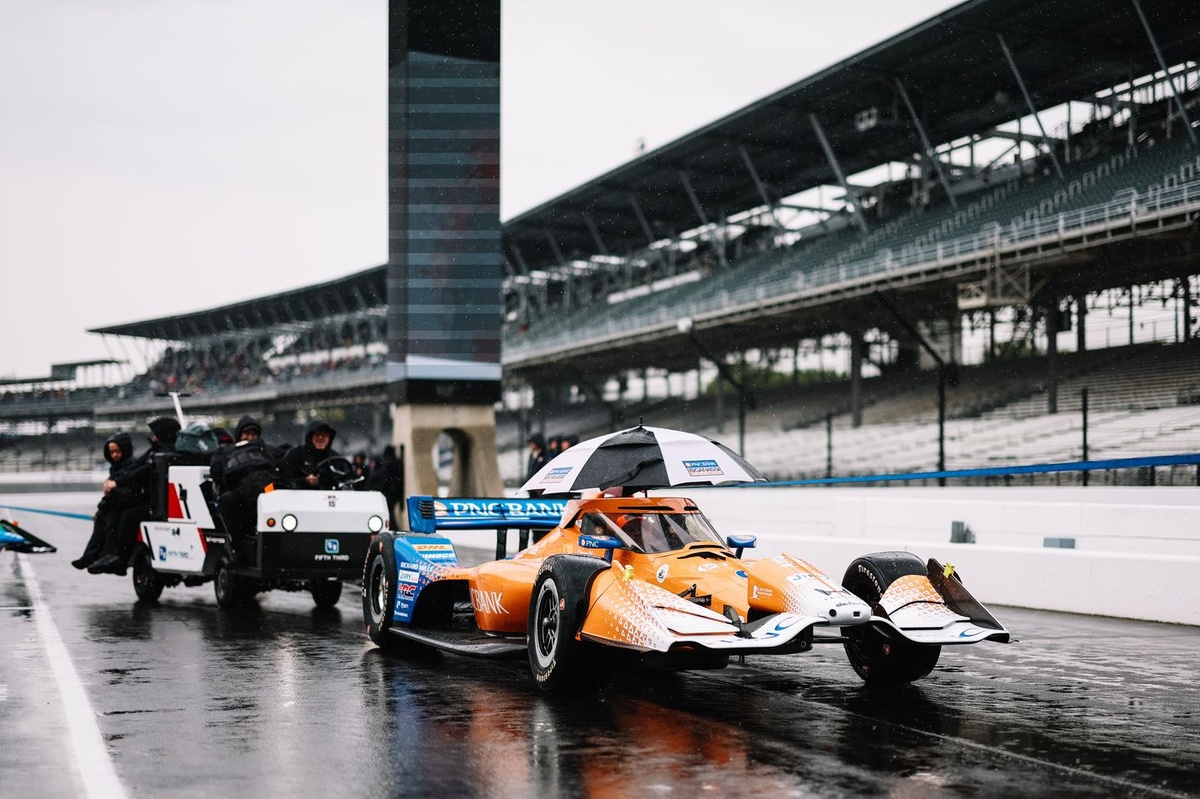
Rahal also questioned whether the approach would degrade the racing rather than improve it, particularly at venues where push-to-pass usage is already strategically loaded. "Particularly at a track like this one this week (IMS road course) and Road America. Everybody's going to be on the button and everybody's going to save up to make sure they've got button left to use, and I'm not sure that that makes the racing any better."
His broader objection was philosophical. The previous rules, Rahal argued, were not the problem - enforcement was. "I think they're trying to get away from the need to police that after what happened with Newgarden and everything else, which I understand that part, but to me the rules are the rules. They've always been the rules. I wouldn't change them."
IndyCar's officiating department has framed the rewrite as a closing of a loophole rather than a relaxation, but the practical effect at Indianapolis this weekend will be racier restarts and an unmistakable mind-game between drivers trying to time their boost more aggressively than their rivals. With Alex Palou, Pato O'Ward and Scott Dixon all comfortable working the button on lap-by-lap calculations, the change is likely to suit the series' established front-runners more than the midfield Rahal has been fighting to escape.
For now, the rule book is the rule book. The drivers can press the button or hold off, but they cannot blame the timing screen if they get it wrong.
---
*Originally published on [Motorsports Global](https://motorsports.global/article/indycar-push-to-pass-rule-change-rahal-not-a-fan-2026). Visit for full coverage.*