
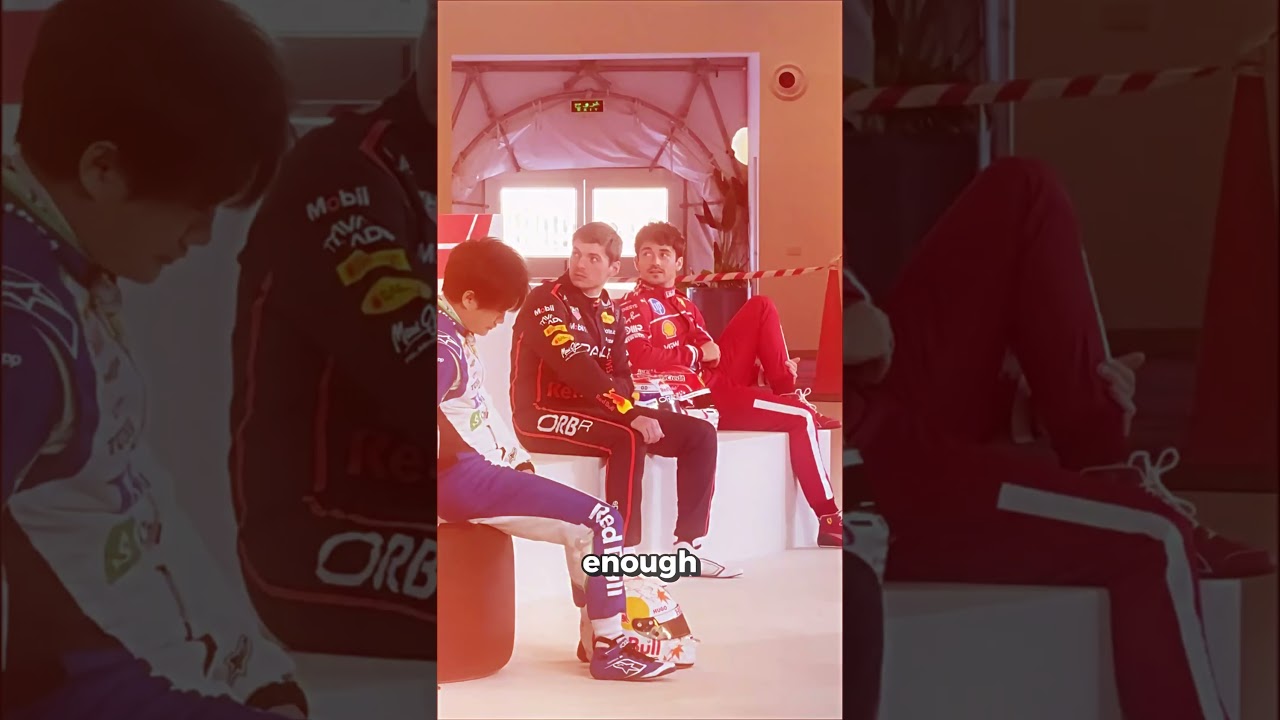
Walk through Monaco's harbour during a normal week and the chances of bumping into a Formula 1 driver are astonishingly high. Out of just 20 drivers on the F1 grid, more than half list the principality as their official home — even though no team factories are based there and most race weekends require a flight out anyway.
The maths only makes sense once you look at the tax code, not the calendar.
F1 content creator Fluxxo broke it down in a viral short this week. The principality has long been a magnet for the world's wealthiest sportspeople, and Formula 1 drivers are among its most loyal residents. "Out of just 20 drivers on the grid, more than half of them call Monaco home, which is weird because there are no F1 team factories there," he said in the explainer. "So why Monaco? It's right in the middle of Europe, making it super easy to travel to most races, and becoming a resident, surprisingly simple if you stay long enough."
The location argument has some merit. Monaco sits on the French Riviera, two hours from Nice airport and within easy reach of every European race on the calendar — Imola, Barcelona, Spielberg, Silverstone, Spa, Monza, Zandvoort and Budapest are all short hops. For a driver living out of a flight bag, Europe-centric logistics matter.
But Fluxxo argued — and the residency data backs him up — that travel is not the real reason.
"The real advantage is money," he said. "Monaco is one of the biggest tax havens in the world. No income tax, no capital gains tax, and for drivers earning millions, that changes everything."
That last point is the engine of the entire trend. A modern frontline F1 driver can earn anywhere between five million and fifty million dollars a year in salary alone, before image rights, sponsorship and bonuses. A driver paying full income tax in their home country can lose half of those earnings in a single season. A driver registered as a Monaco resident keeps almost all of it.
The principality's residency rules are notoriously straightforward for high earners. Applicants need a clean criminal record, proof of accommodation and proof of sufficient funds. There is no minimum stay requirement to claim residence in the way some other tax-friendly jurisdictions impose, although applicants must show genuine ties to the principality. For a driver with a bank balance to match the cost of a Monte Carlo apartment, the bar is functionally low.
The lifestyle pitch is harder to argue with too. Charles Leclerc grew up in Monaco and never had to move. Max Verstappen, Lando Norris, George Russell, Lewis Hamilton, Pierre Gasly, Esteban Ocon and Carlos Sainz are all current or recent residents. Even drivers who keep a property in their home country tend to declare Monaco as their primary tax base.
Fluxxo's bottom line was blunt. "So living in Monaco isn't about racing," he concluded. "It's about keeping what you earn."
For critics, that has long been the uncomfortable optics of the F1 grid: a sport that draws much of its identity from national flags is, in financial reality, registered to a single 2.1-square-kilometre principality on the Mediterranean. For the drivers themselves, the calculation has not changed in decades. As long as Monaco offers zero tax on millions of dollars of earnings, the F1 grid will keep filling its postal codes — race factory or no race factory.
---
*Originally published on [News Formula One](https://newsformula.one/article/why-most-f1-drivers-live-in-monaco-tax-haven-explainer-2026). Visit for full coverage.*